

Ecosystem Enterprise Partnership – Developing Investable Action For River Restoration
Putting forward farmers views on action for water quality improvements through modelling impact of regulation, existing positive achievements, and desired future actions
Purpose & Aims
Ecosystem Enterprise Partnership – Developing Investable Action for River Restoration project aimed to work with farmers to identified opportunities to reduce nutrients and improve water quality of rivers and transform them into investment-ready prospects that are costed and accompanied by detailed implementation procedures, approved by land manager.
Pembrokeshire Coastal Forum(PCF) lead the work with support from Esmée Fairbairn Foundation between May 2024 and December 2025.
The Work
PCF through the Ecosystem Enterprise Partnership – Developing Investable Action for River Restoration project worked 1 to 1 with 5 farms across Pembrokeshire representing 3060 acres of diverse farm land including intensive dairy, arable, and a mixed farming(arable, beef, and dairy). Four of the farms fell within the lower reaches of the Cleddau River or in smaller rivers catchments entering the Cleddau Estuary, with 1 farm being within the Western Cleddau SAC River boundary.
A plan was created for each of the 5 farms that with agir-environment consultancy support from ADAS using the Farmscopper tool a modelled baseline was established of losses (kg and kg/ha) of nitrate-N, phosphorus, sediment and ammonia. The impact of the CoAP regulations were then modelled alongside voluntary mitigation options undertaken on farm, over and above regulation. There was also consideration of what additional measures would have the greatest impact on each farm.
The modelling showed that across the 5 farms that existing action is delivering reductions in loading per year of 2,331kg of nitrate, 112kg of phosphorus, 60,218kg of sediment, and 3,384kg of ammonia. There is also desire to consider more action by all 5 farms and could deliver an additional per year reduction of 3,548kg of nitrate, and 54kg of phosphorus.
If you have an interest in investing in or understanding more about these actions for river restoration please be in touch. Below is further insight from completing the engagement and modelling with the 5 farms.
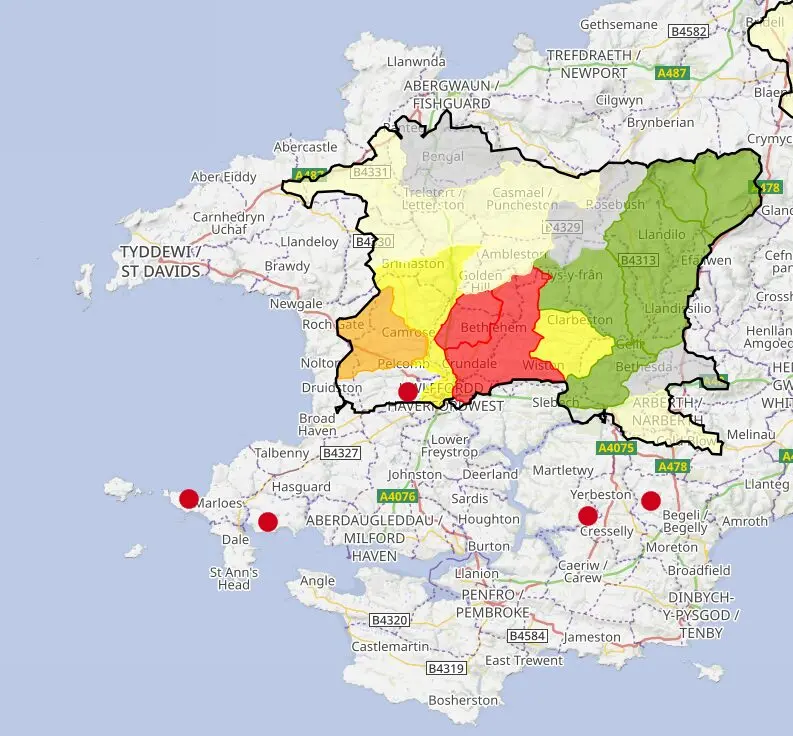
Reducing Nitrate- N Losses
The modelling showed that across the 5 farms in the study the best ways to reduce nitrate-N were to: plant cover crops in autumn, undersow spring cereals, harvest early and plant new crops in autumn, cultivate land for crops in spring instead of autumn, keep stubble on fields over winter, and apply slurry using injection techniques.
Nitrate-N Modelling Results
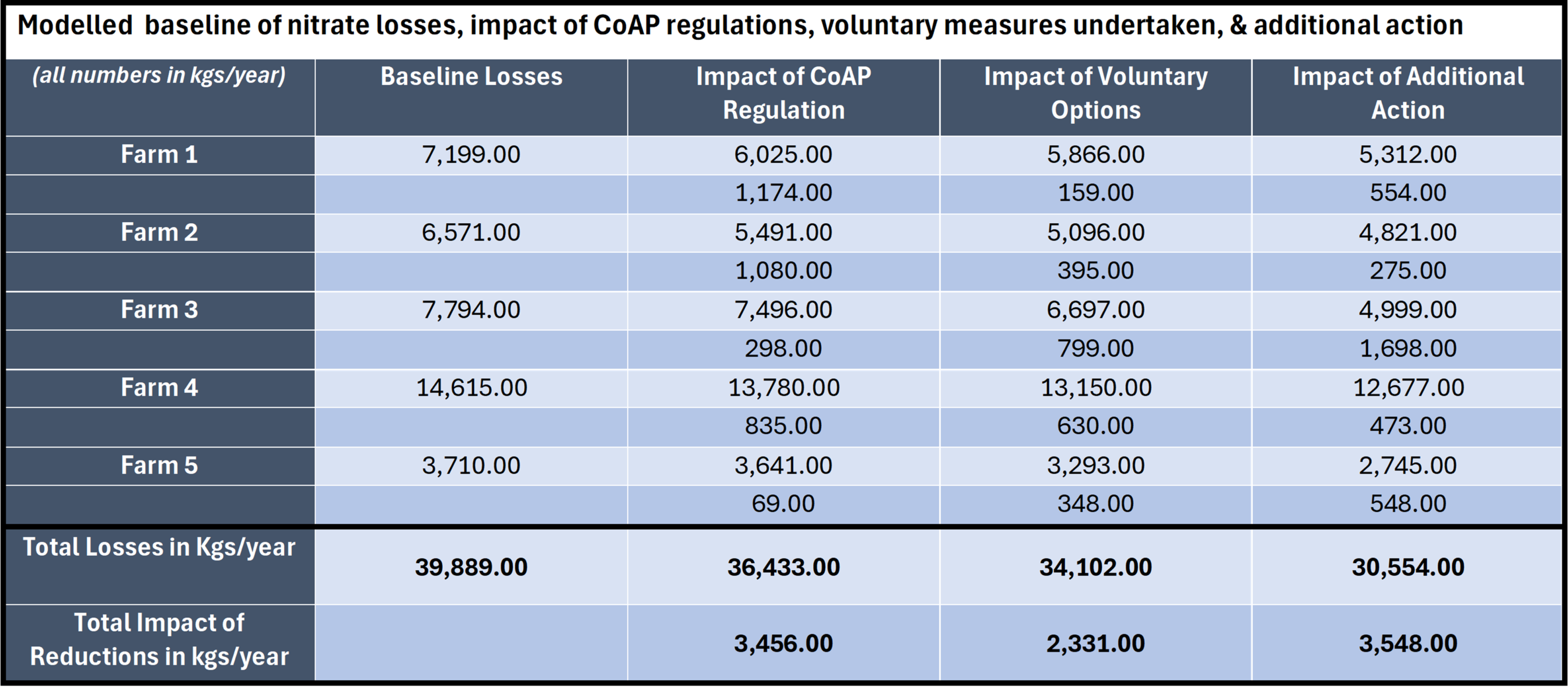
*All numbers in kg/year
Baseline losses is the amount of Nitrate -N that would leave the farm and enter the wider environment without the impact of regulation or voluntary mitigation.
Impact of of CoAP Regulation is the amount of Nitrate – N reduction from the baseline that the Water Resources (Control of Agricultural Pollution) (Wales) Regulations 2021– also known as the ‘CoAP Regs’ that is now a regulatory requirement for farmers to undertake.
Impact of Voluntary Options is the amount of reduction Nitrate – N that additional mitigation measures already being undertaken on the farm.
Impact of Additional Action is the amount of reduction in Nitrate that would be created by the agreed action if investment could be secured to support the additional mitigation measures.
Reducing Phosphorus Losses
The modelling showed that across the 5 farms in the study for the reduction of phosphorus losses it was measures such as establishing cover crops, undersowing spring cereals, cultivating compacted tillage soils, planting areas of farm with wild bird seed / nectar flower mixtures, establishing in-field grass buffer strips and using slurry injection application techniques.
Phosphorus Modelling Results
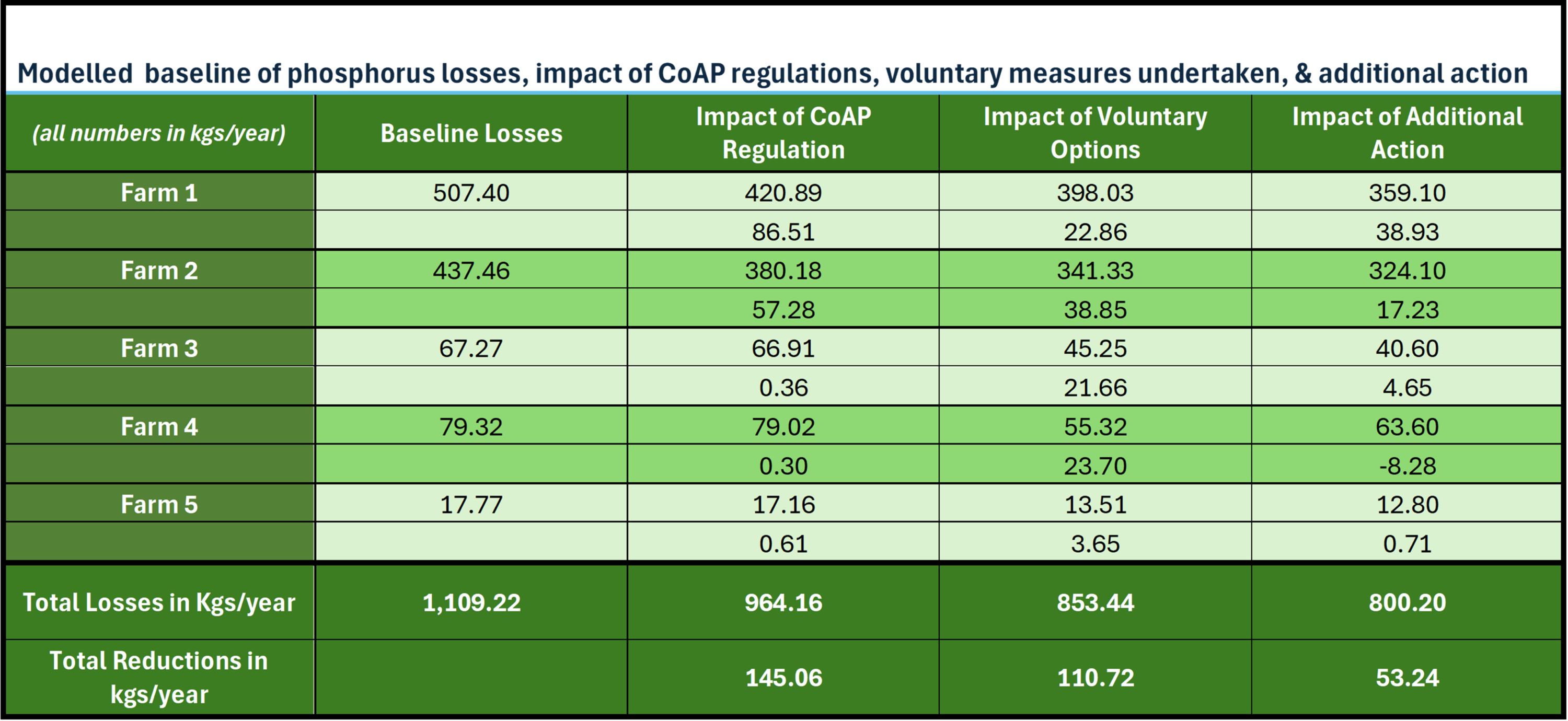
*All numbers in kg/year
Baseline losses is the amount of Phosphorus that would leave the farm and enter the wider environment without the impact of regulation or voluntary mitigation.
Impact of of CoAP Regulation is the amount of Phosphorus reduction from the baseline that the Water Resources (Control of Agricultural Pollution) (Wales) Regulations 2021– also known as the ‘CoAP Regs’ that is now a regulatory requirement for farmers to undertake.
Impact of Voluntary Options is the amount of reduction Phosphorus that additional mitigation measures already being undertaken on the farm.
Impact of Additional Action is the amount of reduction in Phosphorus that would be created by the agreed action if investment could be secured to support the additional mitigation measures.
Next Steps for implementing action
Average costs of implementing different nutrient reduction actions have been provided through the project, though with the complexity of differing purposes/requirements of potential buyers it has not been possible to accurately cost without input from the potential buyer. The work competed will make this process of costing investment with a buyer / funder more robust and quicker.
Measures modelling the greatest benefit vary between farms, with farm system, rainfall and soil type all playing a role in the modelling. Many of the measures listed above derive the greatest modelled benefits for both nitrate-N and phosphorus, so would be an obvious starting point in discussions for wider farm engagement. Robust verification and monitoring of the processes involved in providing the evidence of the modelled reductions would be put in place with input from any investor to meet their desired requirements.
Interested in knowing more about these investment ready opportunities for river restoration?